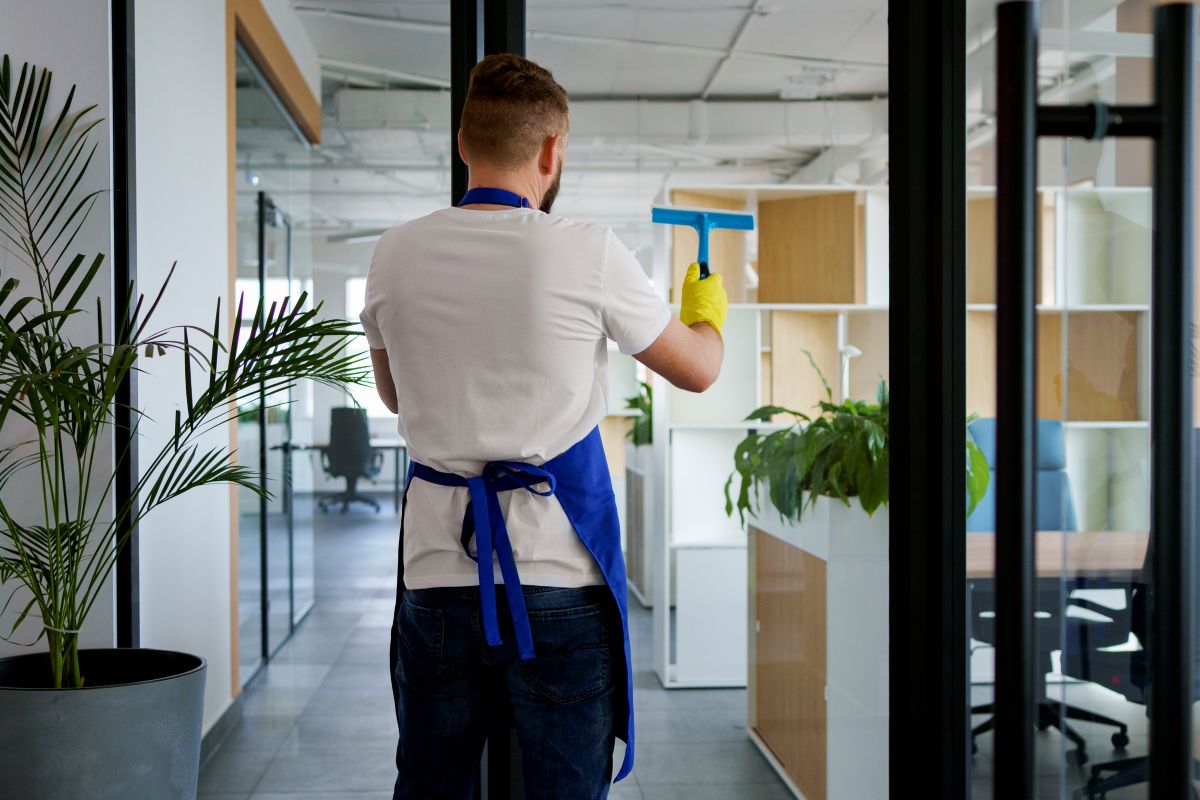
Day Porter vs. Night Cleaning: Choosing the Right Program for Offices, Clinics & Retail
Two approaches, one goal: a consistently spotless, safe, and welcoming space
If you manage a facility in Metro Detroit—office, clinic, school, retail, or multi-tenant—you’ve likely debated day porter service versus night cleaning. Both programs can deliver excellent results, but they solve different problems. This guide explains what each covers, when to deploy one (or both), how to budget, and the KPIs that prove your program is working.
What is a day porter?
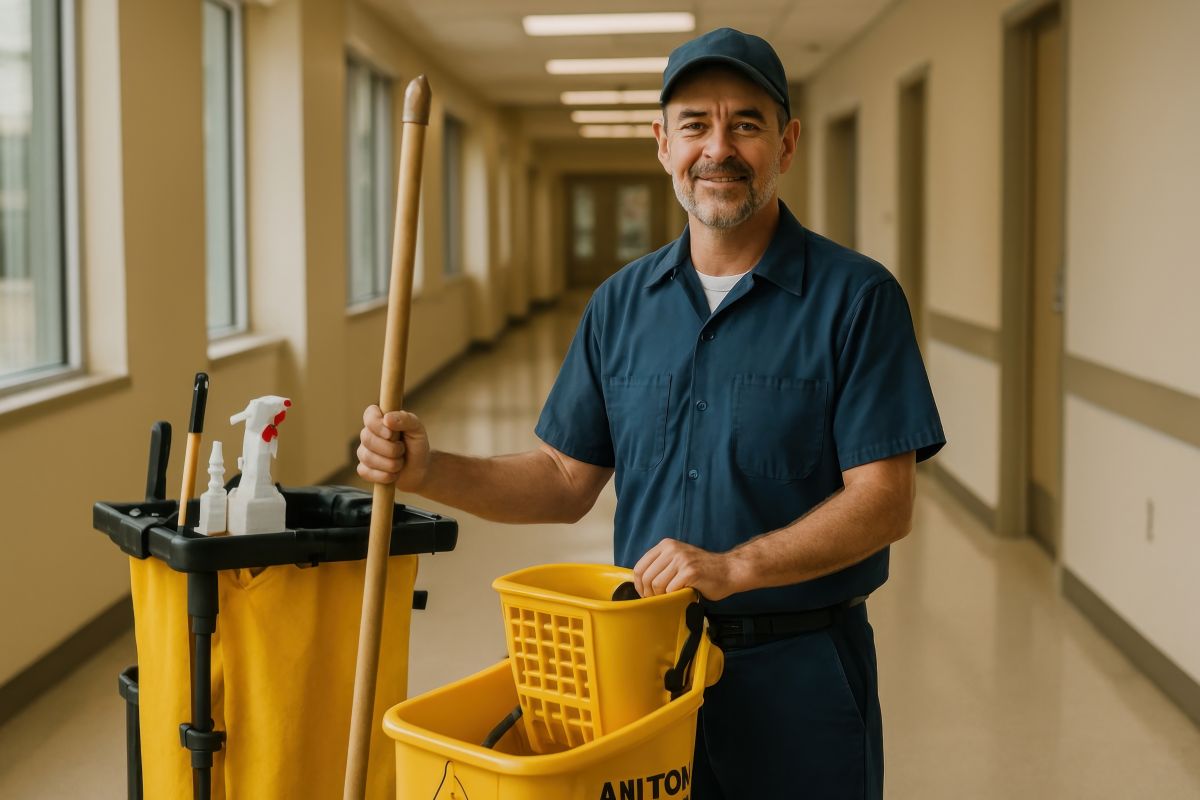
A day porter is an on-site cleaning professional scheduled during operating hours to keep public-facing areas clean and stocked between deep resets. Think of porters as appearance and hygiene stabilizers.
Typical day porter duties
- Restroom checks every 60–120 minutes: sanitize touchpoints, restock, spot-mop
- Lobby resets: fingerprints on glass, crumbs on tables, trash pulls, odor control
- Spill response and slip-fall prevention (cones, spot mopping)
- High-touch sanitizing cycles: door handles, elevator buttons, railings, pin pads*
- Breakroom and café wipe-downs between peaks
- Package/door monitoring and light room set-ups (as permitted)
- Event turnover: meeting rooms, lunch-and-learns, town halls
*Follow device/vendor rules for electronics and payment terminals.
When day porters shine
- High foot traffic all day: clinics, retail corridors, schools, government lobbies
- Peak-based businesses (lunch/dinner rush, class changes, visiting hours)
- Image-critical spaces where fingerprints and clutter are noticed immediately
- Compliance sensitivity (healthcare, education)—documented touchpoint cycles
What is night cleaning?
Night cleaning happens after occupants leave, enabling full-scope janitorial without disruption.
Typical night cleaning scope
- Restrooms: full sanitation and restock, machine scrubs on cadence
- Offices and conference rooms: dusting, surfaces wiped, trash/recycling
- Floors: thorough vacuuming, damp mops, autoscrub routes where possible
- Interior glass/partitions: full pass instead of spot only
- Prep for periodic services: carpet encap/extraction, VCT strip & wax, LVT top-scrub & recoat, tile/grout, and deep cleaning
When night cleaning wins
- Large square footage or many zones that need thorough resets
- Noise/odor sensitivity (clinics, classrooms, open offices)
- Security and privacy—work when desks are clear and traffic is low
- Periodic floor/carpet work that needs cure time or equipment access
Pros & cons at a glance
Day Porter – Pros
- Real-time presentation control
- Immediate spill/safety response
- Comfort and confidence for occupants/guests
- Reduces complaints before they escalate
Day Porter – Considerations
- Visible staff during business hours (align uniforms & etiquette)
- Scope is light/maintenance—not deep resets
- Requires clear boundaries with tenant staff (“who does what”)
Night Cleaning – Pros
- Deep, uninterrupted resets
- Efficient routes with machines (autoscrub, backpack vacs)
- Best for floors, restrooms, glass, and dust reduction
- Minimal disruption and faster results per labor hour
Night Cleaning – Considerations
- No “midday save” without a porter
- Requires robust security/access protocols
- Cure/dry times must be respected before morning re-entry
The hybrid program most facilities choose
For many buildings, the right answer is both: a partial-shift day porter to stabilize the day and a night crew to reset everything. This reduces day-to-day complaints and protects surfaces with routine deep work.
Sample hybrid schedule (office or clinic campus)
- Day Porter (11:00 AM–3:00 PM): Restroom rounds (x2), lobby/glass touchups, breakroom reset after lunch, spill calls, touchpoint sanitizing.
- Night Crew (6:00 PM–10:00 PM): Full restrooms, trash & recycling, dusting, vacuum/mop, interior glass pass.
- Monthly: Carpet encapsulation on traffic lanes; interior glass detailing.
- Quarterly/Semi-Annual: Carpet extraction; VCT top-coat or LVT recoat; tile/grout machine scrub.
Clinics, retail, schools, and multi-tenant buildings—how to choose
Healthcare & dental clinics (non-regulated areas)
- Need: Odor-free, fingerprint-free, documented touchpoints.
- Pick: Hybrid—porter for restrooms/lobbies + night crew for full resets.
- Notes: Low-odor chemistry; manufacturer-safe methods around equipment; we do not handle sharps or regulated medical waste.
Retail & restaurants (front-of-house)
- Need: Glass, entry, host stand, and restrooms stay spotless through peaks.
- Pick: Day porter during lunch/dinner + night crew for deep floors and kitchen-adjacent areas (front-of-house only).
- Notes: Pin pads per vendor guidance; slip-fall prevention is critical.
Schools & learning centers
- Need: Turnover between classes, restrooms that stay stocked, after-hours deep cleaning.
- Pick: Hybrid with porters aligned to bell times + night reset; periodic gym/cafetorium projects.
Multi-tenant & corporate offices
- Need: Lobby presentation, elevator touchpoints, consistent tenant suite resets.
- Pick: Hybrid or night-only, depending on lobby traffic and amenity spaces; campus-wide QA and shared SOPs.
KPIs that prove your program is working
- Complaint rate (per 10k sq ft/month) trending down
- Restroom log compliance (visible rounds, signed and time-stamped)
- Touchpoint cycle adherence (documented, photo-verified samples)
- Slip-fall incidents and spill response times
- Appearance score from supervisor photo-QA
- Rework percentage (issues corrected within next service)
Budget and scheduling tips
- Stabilize first, then optimize. If complaints are mostly daytime (restrooms, fingerprints), add a small porter block before increasing night hours.
- Bundle specialty routes. Schedule carpet encap, window cycles, and floor recoats together to reduce closures and travel time.
- Right-size consumables. Track paper/soap usage; porters prevent “stockouts” that generate complaints.
- Seasonalize labor. Increase porter rounds in winter salt season and during spring pollen; let night teams handle neutralizing rinses and deeper floor work.
Security, safety, and communication
- Porters: Visible badge/ID, customer-service training, clear escalation path to the facility manager.
- Night Crews: FOB/key control, alarm protocols, building etiquette for docks/elevators.
- Both: SDS on-site, labeled spray bottles, color-coded microfiber to prevent cross-contamination, slip signage, cord control.
- One point of contact: Centralize requests; track patterns to adjust frequencies rather than chasing one-off issues.
Implementation checklist (30-day rollout)
- Walk-through & scope map: Entrances, lobbies, restrooms, breakrooms, elevators, highest-visibility glass, spill zones.
- Traffic study: Identify lunch waves, shift changes, appointment clusters.
- Program selection: Day porter, night cleaning, or hybrid; define exact hours.
- Checklists & QA: Room-by-room tasks, frequency grid, and photo-QA cadence.
- Consumables plan: Who supplies what; reorder points; storage.
- Communication: Work order channel, response SLAs, escalation.
- Kickoff & tune-up: First two weeks of daily feedback, then seasonal adjustments.
Metro Detroit specifics that change the math
- Salt season (Dec–Mar): Add porter rounds to entries and restrooms; night crews perform salt-neutralizer passes, autoscrub routes, and top-coats (VCT) or LVT recoats as needed.
- Event seasons: Holiday parties, school concerts, and retail promotions demand temporary porter coverage and post-event resets.
- Glass & lobbies: Downtown and suburban corridors show fingerprints fast—monthly interior glass passes + porter spot cleaning keep first impressions strong.
The bottom line
Choose day porters when you need real-time presentation and safety during open hours. Choose night cleaning when you need deep, efficient resets without disruption. Most facilities benefit from a hybrid: a modest porter block to stabilize the day, paired with a night crew that restores everything. Align tasks with KPIs, seasonality, and your brand standards—and revisit the plan quarterly.

.avif)
.avif)
.avif)